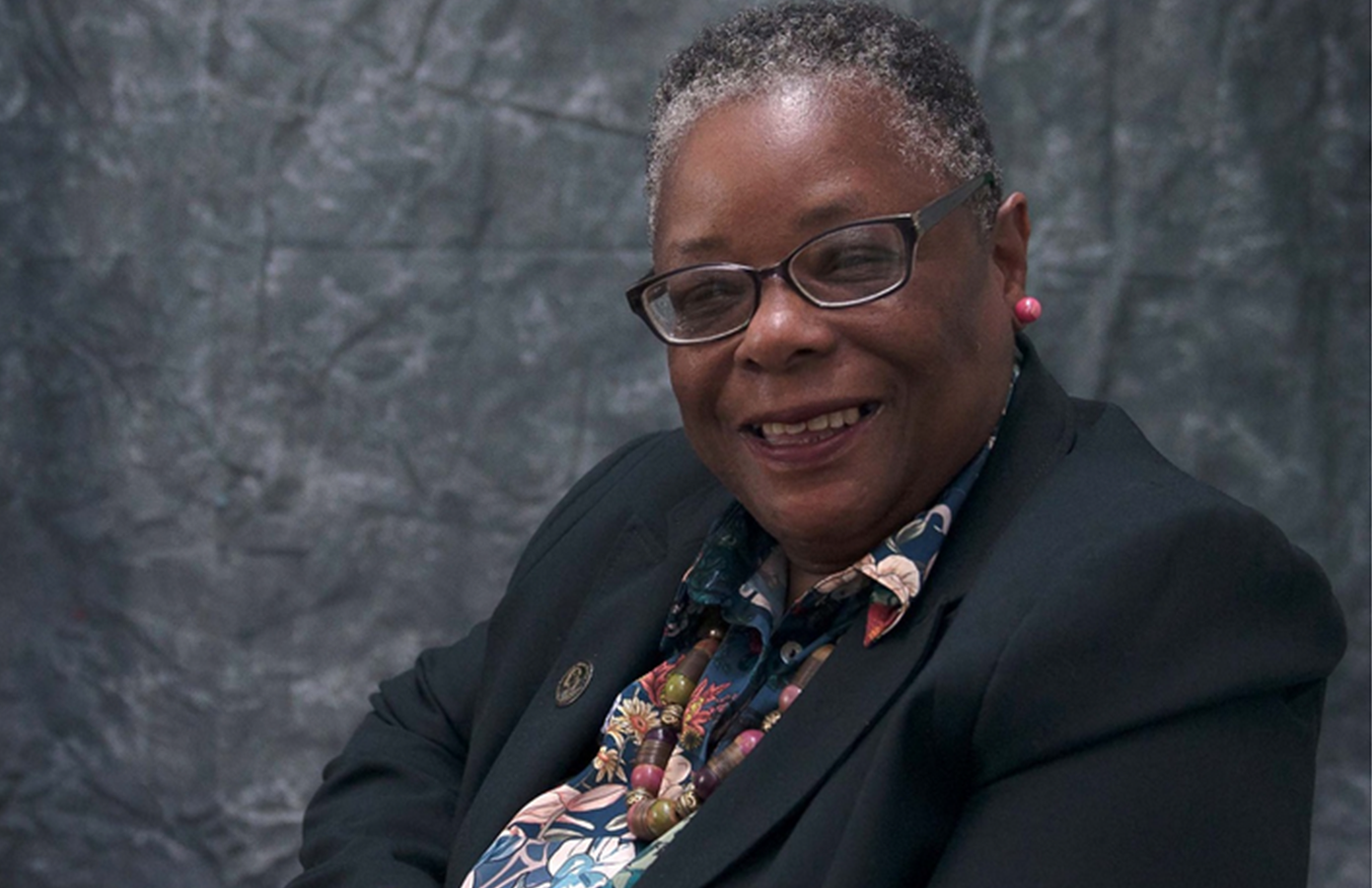
It is no secret that childhood experiences profoundly shape the adults we become. So, Marcia Hutchinson’s book The Mercy Step, which centers on the life of a Black child in 1960s Britain, will especially resonate with Windrush-era readers of Caribbean heritage, for its focus on those turbulent years.
Further, its setting in Bradford, where the former lawyer and publisher was born and raised to Jamaican parents, pulls back the curtain on the often invisible Northern Black Experience.
“You’re literally layering one culture on top of another, and you’re taking a Jamaican culture and transplanting it into the north of England. It is so rooted in place, but what I was doing when writing it was capturing my childhood, and Bradford and the north of England are integral parts of it. It wasn’t until after I’d written the book and looked back on it that I thought Bradford is actually one of the major characters in the novel.”
The book is a powerful blend of fact and fiction, which weaves together topics such as the clash between Caribbean-born parents and their first-generation British-born children as well as the role of religion as an emotional anchor in the face of racial hostility and marginalisation.
Hutchinson said she chose the literary form to give herself creative freedom. “It was about getting at an emotional truth rather than a literal truth. And I think sometimes when you’re so concerned about getting to the facts. It’s almost as if you’re putting yourself in court, going, ‘I want to tell the truth, the whole truth, and nothing but the truth.’”
Mercy (aka Hutchinson), the central character, is a perceptive witness. Beginning in the womb, she narrates and interprets the events around her, later protecting her mother from her father’s unpredictable temper. She also serves as a cultural rebel and pioneer, claiming her right to forge a new identity based on her Jamaican heritage and British citizenry.
The story sat with Hutchinson for decades. “I know I was thinking about this from my 20s, and it took until my late 50s to write it. I’d been single for the first time in my adult life for any big chunk of time, and the children had grown up, and I downsized, and I had space to look at my early life and think, ‘how has that impacted the woman I have become?’”
Though at first unconsciously worried about what others would think, Hutchinson said: “I felt that I had the right to be true to myself because I don’t think I was ever going to be the real me until I spoke my truth.”
The Mercy Step tackles some tough subjects, including domestic abuse, poverty and family conflict, but carefully balances truth-telling with empathy for the real people involved. The approach has hit home with readers, especially “Black women of a certain age,” Hutchinson said. “It’s almost been a shock to me when so many people have said I just wanted to go back and hug Little Mercy.”
And it is scoring points with the literary establishment too, winning the 2026 British Book Awards’ Discover Book of the Year and being shortlisted for the 2026 Women’s Prize for Fiction (marking the first time for a Black-owned independent publisher). The book was rejected 54 times before finding a home with Cassava Republic Press, an African-owned, women-led independent publishing house with headquarters in Nigeria and the UK.
Hutchinson laboured over the work for over 10 years in different forms, attending an informal workshop where “anyone would turn up, read what they wanted and get feedback.” She recalled a tutor, “a wonderful man called Peter Carlu, who every week would say, ‘I think you’ve got something there, Mercy’s the one, you know, it’s brilliant.’ I would take no notice of him and think, he’s just being nice.” Though skeptical, Hutchinson said she kept writing because, “I felt better each week. It was almost like therapy.”
Eventually, after attending a more formal course where everyone read extracts of their work, Hutchinson realised she had created something really special. “I remember reading what is now the opening chapter of The Mercy Step, which is, you know, Mercy narrating her own birth, and the room just went quiet. You could have heard a pin drop. And I thought either it’s terrible or it’s really good.”
Though the answer is now clear, Hutchinson is still surprised by the book’s success. “I said to myself, I’m approaching retirement, never mind, you never had the writing career, don’t worry about it, it was a nice dream, just do writing as a hobby, and then blow me down with a feather, five years later, I’d been shortlisted for the Women’s Prize, the book is selling out, we’re on the second reprint. I’m like, oh my goodness! It was almost as if when you give up on the ambition, that’s when it happens.”
The Mercy Step is available in paperback and digital formats through major retailers and independent bookshops including Waterstones and Bookshop.org
Watch Marcia here are she discusses how she organises her books, her favourite bookshop and the advise she would give her younger self.