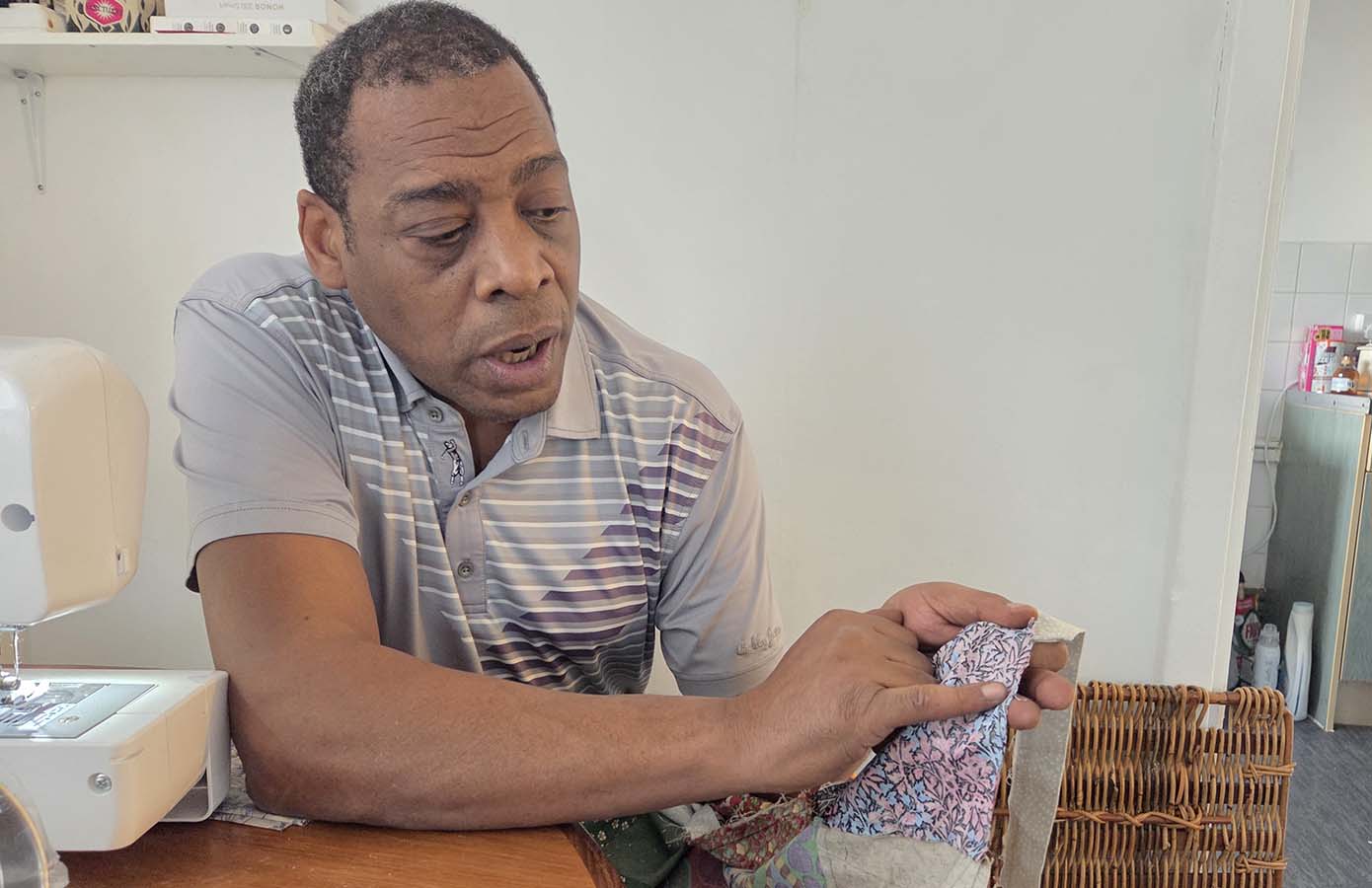
Lennox Esprit learnt to make quilts and cushions during his stay in a South London prison Brixton Prison from 2021 to 2022. It brought a sense of peace and calm to his restless mind. “I was in and out of prison for petty crimes, for most of my adult life,” he said, his eyes betraying some major sadnesses with which he still had not quite come to terms.
“It is a vicious circle and the same thing that happens religiously every time I come out. You get through probation and then it is back to the same people, places, and things with which you are associated,” he said of his repeated incarceration stints.
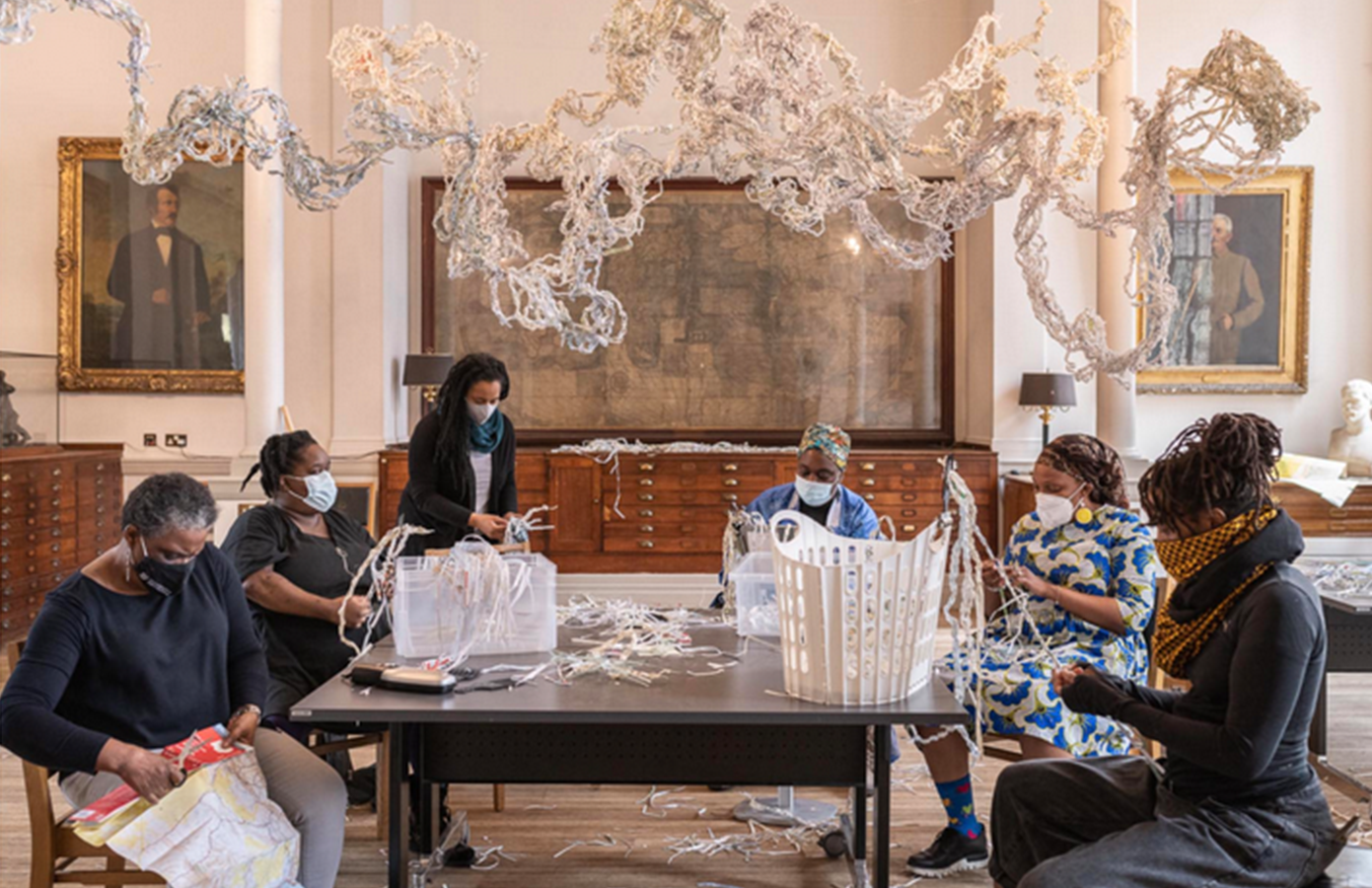
This time Esprit found connection and purpose after meeting volunteers from a charity called Fine Cell Work, which trains current and former prisoners to do needlework, paying them to create handmade designs by world renowned artists. “I will never forget them. Just ordinary women that run this charity which had been running for over 25 years within the prison system,” Esprit explained.
Spurred to change after his mother died, Esprit enjoyed learning the craft and waited eagerly for each assignment after completing one. And being teased mercilessly by fellow male inmates for doing what they perceived as a female dominated pastime didn’t deter him. “I knew that I would have the last laugh, of course, when they saw my finished pieces, they wanted to make one for their wives and girlfriends.”
The quilts are made from 4 x 4 inch squares of cotton or silk in solid colours or floral, paisley or madras prints. They can take anything from a day, to months, depending on the size, he explained.
Esprit was so inspired by the new craft that he participated in the program for about seven or eight months, until he was released. Then he joined The Fine Cell Work Hub and started volunteering. The next 2 1/2 years were spent in a recovery house while working with an initiative, called ‘Go back, to give back’ which sends formerly incarcerated volunteers into prisons to talk to detainees and soon to be ex-offenders about changing their lives. Former cell mate Mark Capelton, who attended some of Lennox’s lectures, acknowledged the importance of Esprit’s advocacy. “I am crime free and working now, Lennox really inspired me to do better.”
Born in London to Dominican parents, Esprit is mindful of the synergy between his work and his childhood, when he would watch his mother, a machinist, from the island’s Carib Reserve, stitching women’s garments on her sewing machine.
“I would happily sit with her for hours handing her colourful bits of material or just turning pockets inside out and stacking them into finished piles,” Esprit said. Those colours were sometimes the vibrant reds, greens, and yellows of Madras fabric, the national costume of Dominica ‘robe duet’, which hails back to the country’s African and Indian cultural heritage.
Esprit is passionate about the fabrics he uses, which are donated by textile designers, Kaffe Fassett and Brandon. “They help me a lot mentally because I cannot be without fabric,” he said, adding that he was awarded a small local authority grant to set up a home business.
In the meantime, recognition of Esprit’s work continues to grow. Featured nationally, it underscores just how much the activity is helping him transform his life.
“I tell youngsters to stay away from prison whilst emphasizing what taking up quilting has done for me. At its core, it’s calming and gives me a sense of purpose that is so rewarding when I complete a project. And to top it all, it goes on exhibition [sic] and people see it and you then sell it. So, it has potential to become a business.”
Esprit’s work is on display in the A Fine Cell Work exhibition, ‘Make a Wish’ at the Victoria & Albert Museum. For more information about the organization and to buy products, visit, https://finecellwork.co.uk/collections/all